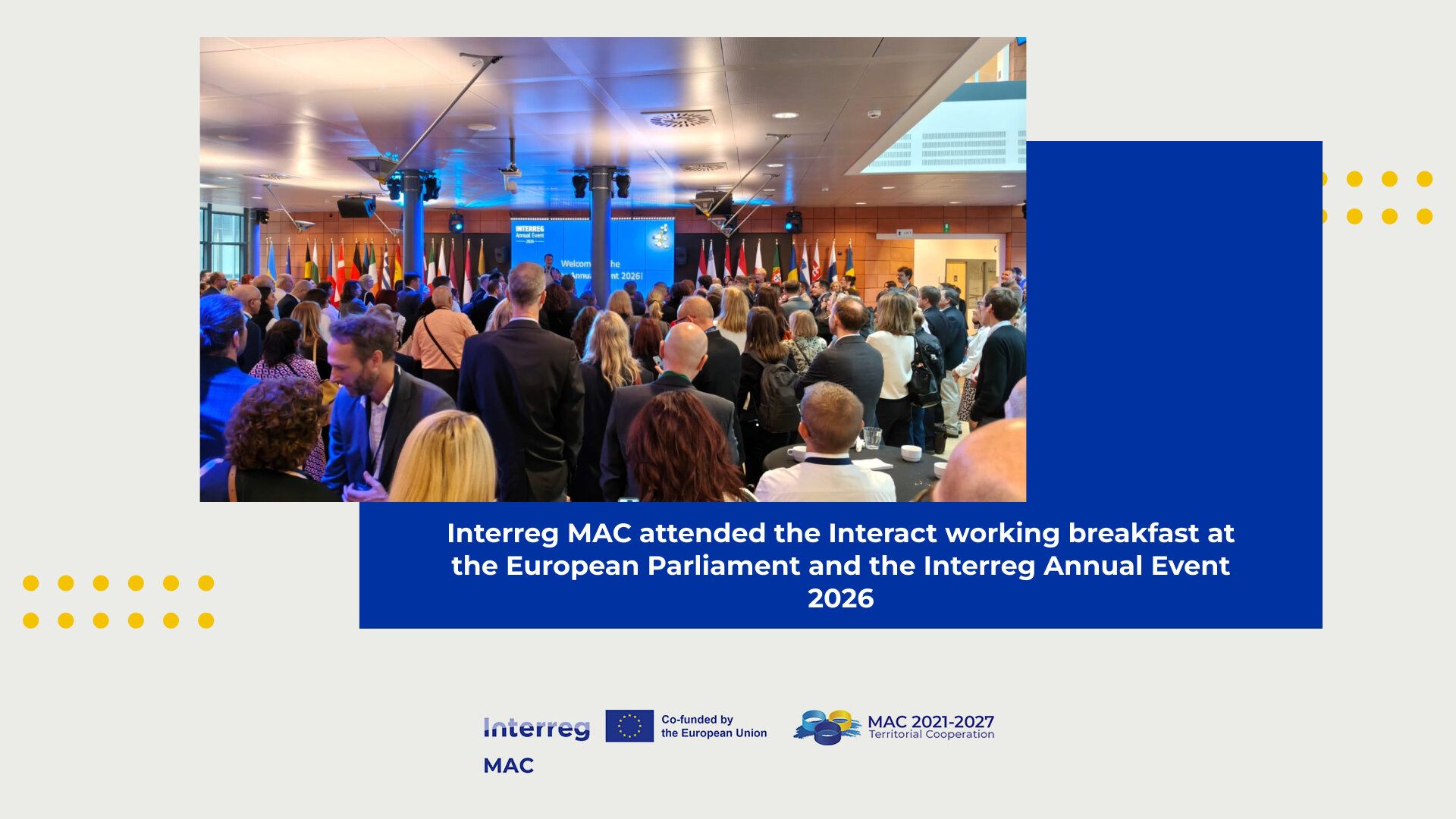
INTERREG MAC ATTENDED THE INTERACT WORKING BREAKFAST AT THE EUROPEAN PARLIAMENT AND THE INTERREG ANNUAL EVENT 2026
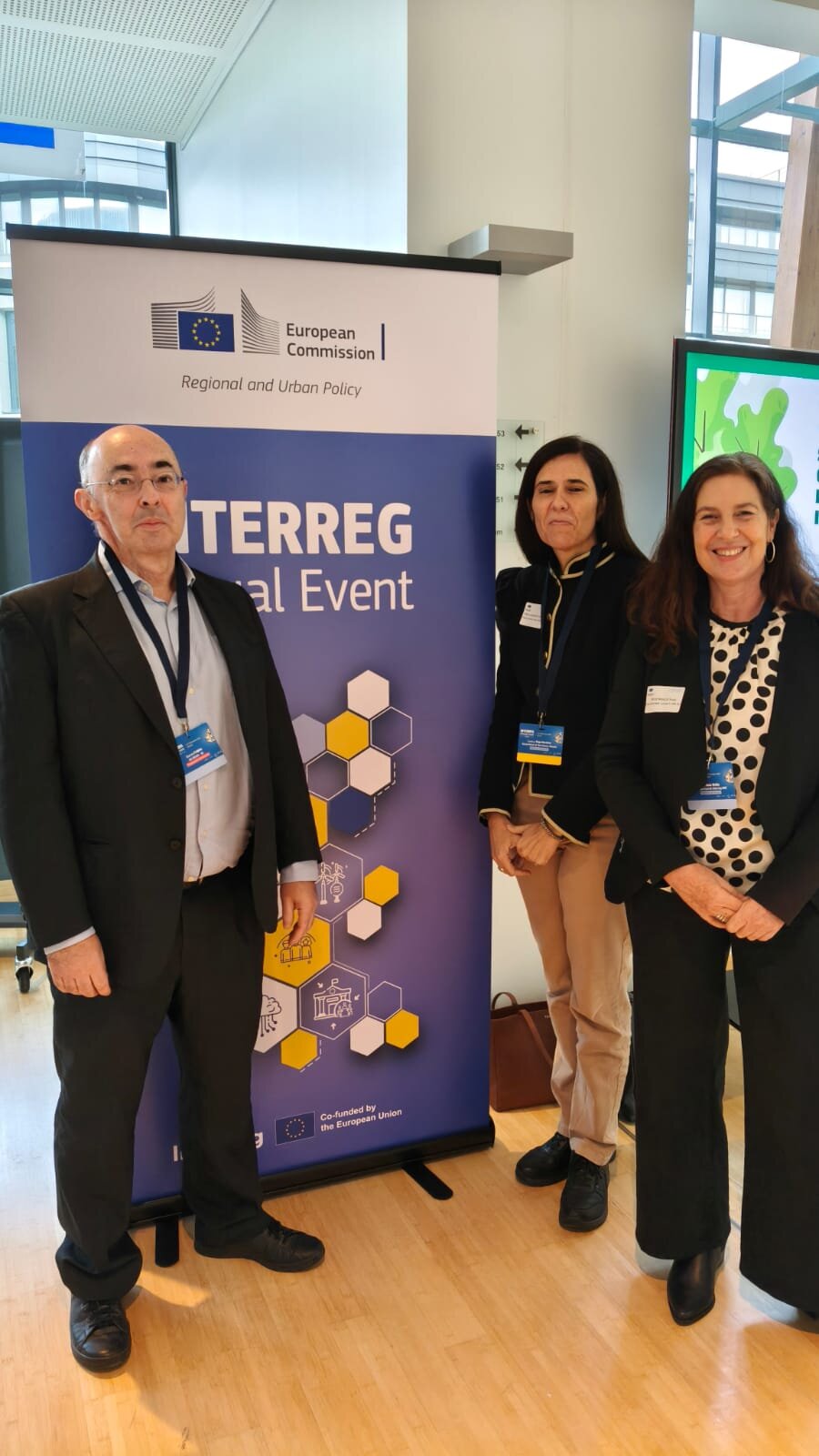
The Interreg MAC 2021–2027 Territorial Cooperation Programme was present in Brussels on 12 November at two key events for European territorial cooperation. Carolina Vega Martínez, representing the Managing Authority (Directorate-General for European Affairs of the Government of the Canary Islands), and Irene Ruiz Rolle, coordinator of the Joint Secretariat, attended.
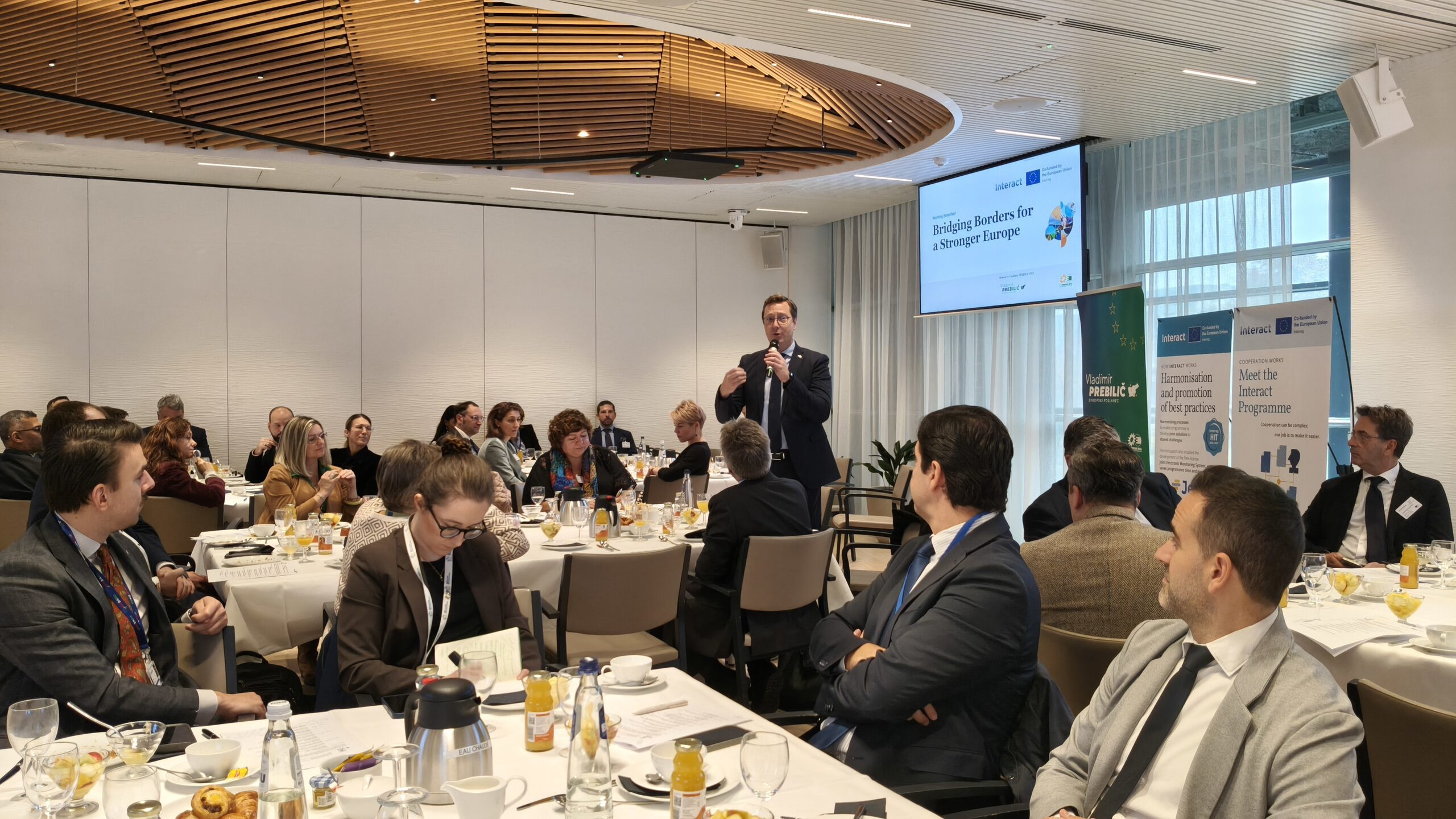
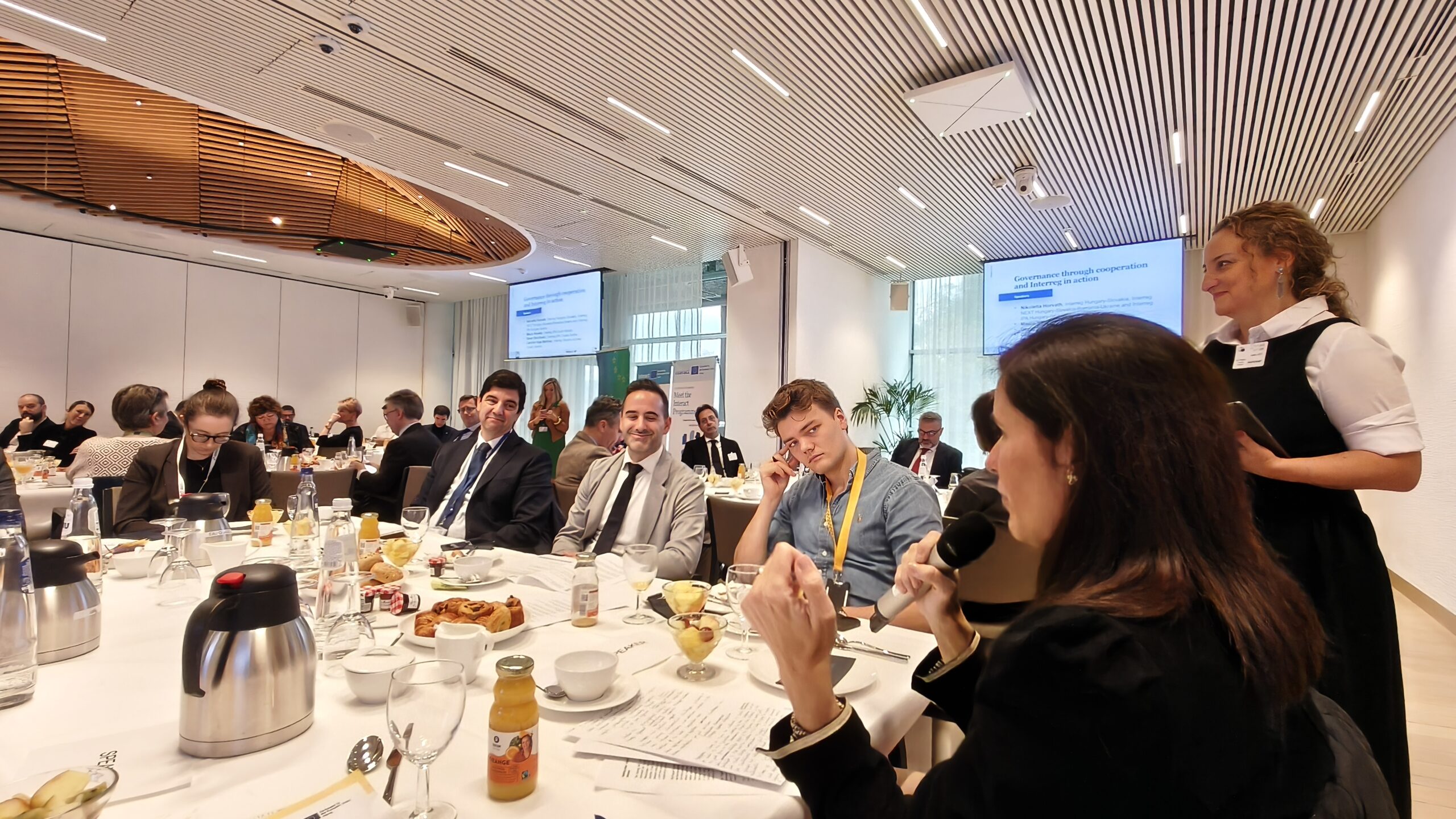
The day began at the European Parliament with a working breakfast entitled “Building bridges across borders for a stronger Europe”, organised by Interact – the European programme supporting Interreg programmes – and hosted by MEP Vladimir Prebilič. The meeting was attended by representatives from Interreg programmes, the European Parliament, the European Commission and the diplomatic corps to analyse how Interreg transforms cross-border challenges into joint solutions. They did so by drawing on real-life examples of cooperation from programmes involving Member States, non-EU countries and outermost regions.
Within this framework, Carolina Vega, the representative of the Managing Authority, took the floor to explain how the Interreg MAC programme, now in its 25th year, has established itself as a key instrument for cooperation between the outermost regions of Macaronesia (the Canary Islands, Madeira and the Azores) and seven African partner countries: Cape Verde and São Tomé and Príncipe, which are also archipelagos, and Mauritania, Senegal, The Gambia, Côte d’Ivoire and Ghana, on the west coast of Africa.
In her speech, which focused on strengthening governance and joint solutions, she highlighted that cooperation has evolved from isolated initiatives to shared priorities, joint planning and collective responses to common challenges. They explained that the Programme has become a genuine Euro-African partnership, in line with the EU’s strategy for the outermost regions and with its aim of harnessing the geostrategic value of these territories to strengthen the European Union’s presence in the world.
The figures support this trajectory. Over the three previous programming periods, from 2000–2006, more than 500 projects were funded. In the current period, the Programme already comprises 77 projects and more than 350 partner organisations from the ten participating territories.
As an example, they presented a flagship project for each of the Programme’s four priorities:
- Smart MAC: AFRICANTECH. European and African organisations are collaborating on innovation and digital transformation to strengthen SMEs, develop digital skills and promote business exchanges and knowledge transfer.
- Green MAC: WACCID. This brings together organisations from the Canary Islands, Senegal, The Gambia, Ghana and São Tomé and Príncipe to strengthen the climate resilience of vulnerable coastal communities. It combines climate change adaptation with access to energy, water, sanitation and food security.
- MAC Governance: ATLANTE. This is the Programme’s strategic project. It brings together public authorities from the three outermost regions and the seven African partner countries, alongside the EU Delegations. In this way, it creates a common framework for institutional dialogue, shared priorities, thematic working groups and better coordination between European funding instruments.
- MAC Mobility: COMPASS. It promotes an Observatory on Human Mobility between the Canary Islands and Africa to address migration in a more informed and coordinated manner, based on evidence, awareness-raising and the exchange of knowledge.
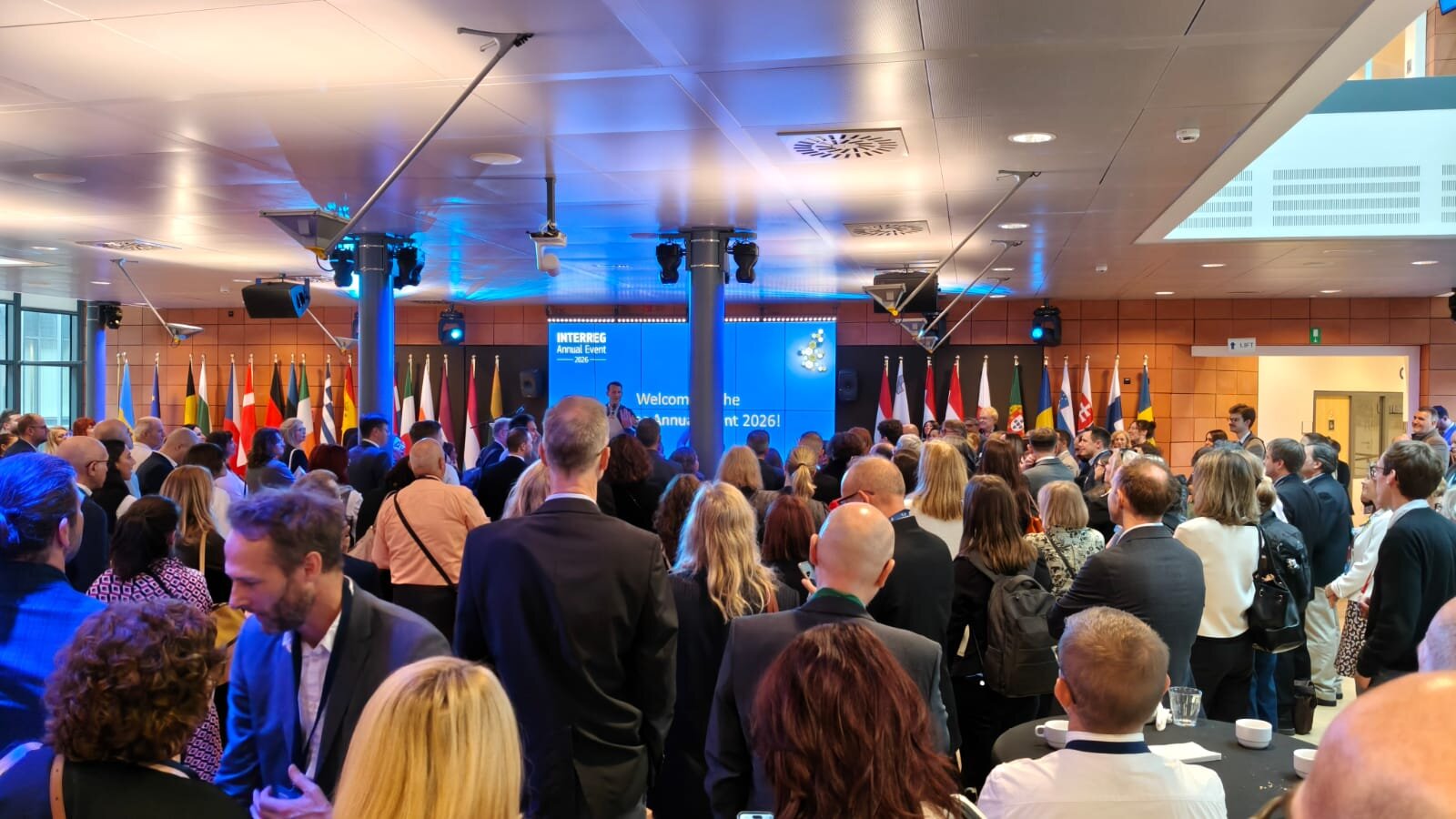
Subsequently, representatives of the Programme travelled to the European Committee of the Regions to take part in the Interreg Annual Event 2026, held on 12 and 13 November. The first day included the plenary session “Quo Vadis Interreg?”, dedicated to the guidelines for territorial cooperation for the next programming period 2028–2034, and a session in which the Interreg programmes themselves presented their current situation and the challenges they face. The second day of the event focused on future priorities, with an emphasis on the maritime dimension of Interreg, the governance of cooperation and the Union’s external borders.
Participation in both meetings reinforces the visibility of the MAC area in Brussels and its role in the debate on the future of European territorial cooperation.